What Is The Best Wildlife Sanctuary In Australia?
Healesville Sanctuary makes a strong case for the title of Australia's best wildlife sanctuary, and it sits inside the Yarra Valley wine region. Here is how it compares and how to reach it without a car.
What Is The Best Wildlife Sanctuary In Australia?
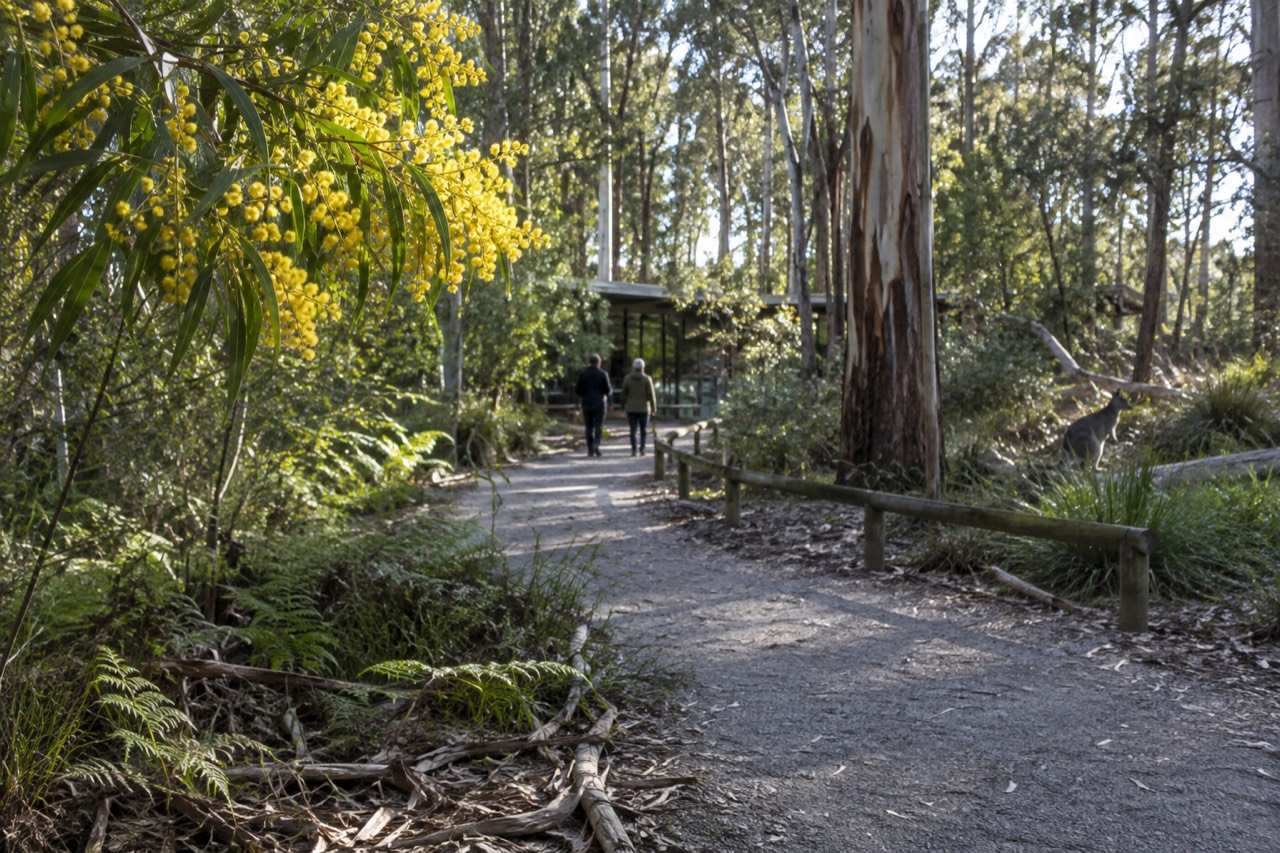
There is no official ranking, but Healesville Sanctuary in Victoria is the strongest single answer for the best wildlife sanctuary in Australia. Located near Melbourne, it specializes in native Australian animals, including kangaroos, koalas, platypuses, and wombats, and is widely praised for its conservation work, close-up animal encounters, and role in treating injured wildlife, making it a standout choice for visitors. It is the only major sanctuary set inside a premium wine region, it runs the breeding program that saved the Helmeted Honeyeater, and its parent body, Zoos Victoria, recorded 2,670,276 visitors across its four properties in 2024-25. Nothing comparable is published for any rival, so any "best" claim rests on what each place demonstrably does rather than on a title anyone has awarded.
That is the honest starting point. Australia has several excellent wildlife parks and sanctuaries, and the travel internet is full of listicles crowning one or another, usually with no evidence beyond a writer's preference. What can be checked is what each institution actually does, what it charges, and what it has contributed to conservation. On those measures, Healesville Sanctuary has a claim few others can match, and it happens to sit 67 km from Melbourne at the cool, green end of the Yarra Valley.
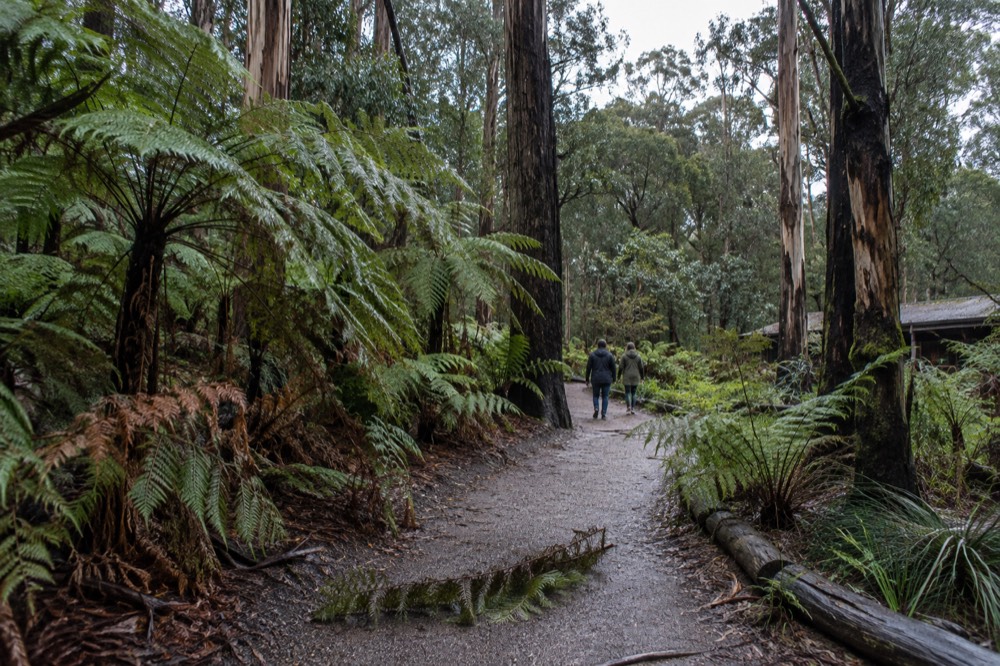
The sanctuary's signature achievement is the Helmeted Honeyeater, Victoria's bird emblem and a species that came within a whisker of extinction. In May 2025, 21 birds bred at Healesville were reintroduced to Cardinia Creek near Upper Beaconsfield, an area the critically endangered species had not occupied for more than 40 years, prior to the 1983 Ash Wednesday fires. That established a third wild population. A sanctuary that is actively putting an endangered bird back into habitat it has been absent from for four decades is doing the job, not just displaying the results.
There is a practical reason this matters to a wine-country reader specifically. Healesville Sanctuary sits inside the Shire of Yarra Ranges, in the heart of the Yarra Valley wine region, close to the Healesville cellar door cluster. It is one of very few major Australian wildlife attractions you can genuinely fold into a food and wine day. If you are planning any kind of Yarra Valley Wine Tours style visit, the sanctuary is the obvious non-wine half of the itinerary.
For visitors weighing the two halves of a day against each other, these three tours cover the most common ways people combine the valley's wine and its wildlife:
Why Healesville Sanctuary Keeps Winning The Argument
Healesville Sanctuary keeps winning the argument because it concentrates entirely on Australian wildlife, runs breeding programs that have changed wild populations, and sits in bushland at the edge of a wine region. Where a general zoo spreads itself across continents, this one goes deep on a single country's animals, and the results show in both what visitors see and what happens beyond the fence. It is not a zoo with a native animal section, and it is not a tourist park built around photo opportunities. Its platypus breeding record in particular is world significant, and the new Australian Platypus Conservation Centre extends that work into rehabilitation and research that no comparable private attraction in the country is attempting on the same scale.
The platypus is the sanctuary's international calling card. Healesville was the first place in the world to breed platypus in captivity, and it remains the institution other bodies turn to. Stage one of the $1 million Australian Platypus Conservation Centre opened in July 2025: a rehabilitation facility with nine connecting ponds of varying depth and flow, banks for burrowing, and water climate-controlled at 18 degrees C. The project received $5 million in Victorian Government funding in 2022. One caution for trip planning: stage one is a rehabilitation facility, not a visitor exhibit, so do not expect to walk through it. Stage two, a transformed visitor experience, was anticipated to be completed in 2026, and you should check the sanctuary's own site for its current status before counting on it.
The scale behind the sanctuary also matters. Zoos Victoria recorded 2,670,276 visitors across its four properties, Healesville Sanctuary, Melbourne Zoo, Werribee Open Range Zoo and Kyabram Fauna Park, in 2024-25, against its own target of more than 3,000,000, which it did not meet. It had 352,089 active members against a target of more than 400,000. That is a large, accountable, publicly reported organisation, and its annual report was tabled in the Victorian Parliament. No comparable published figures exist for the private wildlife parks that compete for the same visitors, which is itself telling.
If the wildlife half of your day sounds appealing but you want the wine half handled for you, a driven small-group option exists that ends with kangaroos rather than starting with them:
What it costs to get in
Admission is the part most guides get wrong or leave vague, so here it is plainly, read from the operator's own ticketing page. Adults enter from $58.00, concessions from $44.00, seniors from $52.50, and children aged 4 to 15 from $29.00 on weekdays, with children aged 0 to 3 free. The single most useful money fact: children enter free on weekends, public holidays and Victorian Government school holidays, accompanied by an adult or someone aged 16 or over. Check the Zoos Victoria tickets page before you go, because prices move.
| Ticket type | Price |
|---|---|
| Adult | from $58.00 |
| Concession | from $44.00 |
| Senior | from $52.50 |
| Child 4 to 15, weekday | from $29.00 |
| Child 0 to 3 | free |
| Children on weekends, public holidays and Victorian school holidays | free |
How Does Healesville Sanctuary Compare With The Alternatives?
Compared with its three sibling zoos and the private wildlife parks, Healesville Sanctuary stands out as the bushland specialist, focusing entirely on Australian species, backed by a strong endangered-species breeding record, and set apart by its location inside wine country. Melbourne Zoo is the generalist city zoo, Werribee is the open-range safari park, and Kyabram is the small regional one. The private parks offer handling and photos, which Healesville deliberately does not, and none of them publish annual reports or independently audited visitor figures that would let anyone check their claims.
The comparison below sticks to what can be stated from the published record rather than opinion. The visitor figure is the Zoos Victoria total across all four properties, because the annual report publishes no Healesville-only number, and never let anyone tell you otherwise.
| Attraction | What it is | What the record shows |
|---|---|---|
| Healesville Sanctuary | Australian wildlife only, in natural bushland at the Yarra Valley's eastern end | Helmeted Honeyeater reintroduction, May 2025; platypus breeding pioneer; Australian Platypus Conservation Centre stage one, July 2025 |
| Melbourne Zoo | Generalist city zoo, exotic and native species | Part of the same Zoos Victoria group, 2,670,276 visitors across four properties in 2024-25 |
| Werribee Open Range Zoo | Open-range safari-style park | Same group; no separately published visitor figure |
| Private wildlife parks | Commercial parks with animal handling and photo experiences | No published annual report or independently audited visitor figures found |
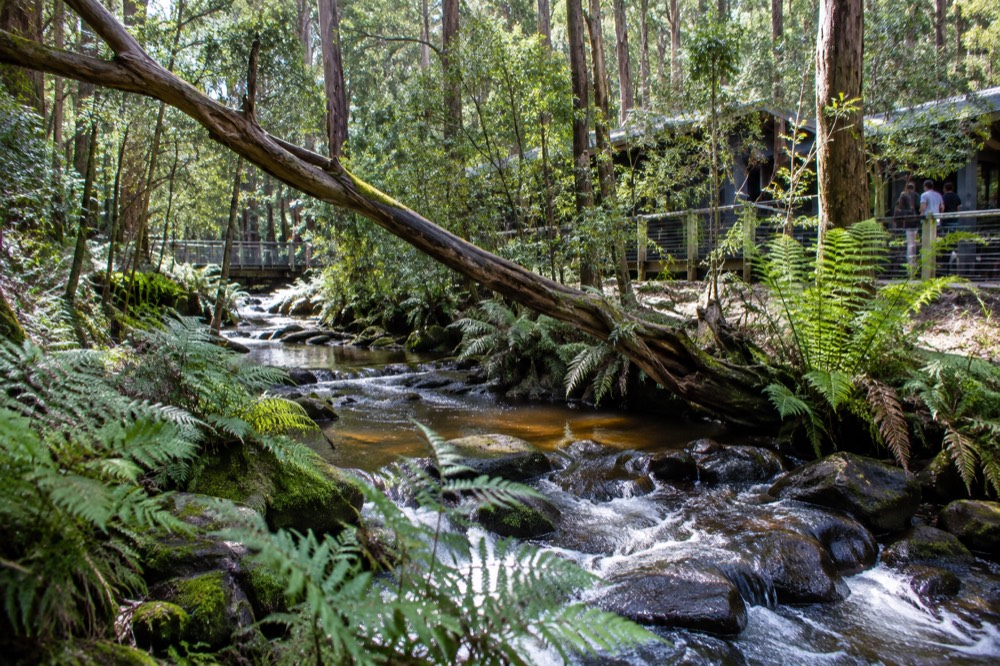
The honest way to frame "best" is this: if your measure is conservation output that changes wild populations, Healesville's record is the strongest documented case in the country. If your measure is holding a koala for a photograph, a private park will serve you better, and there is nothing wrong with that. The sanctuary's model is habitat-first, which is why the bushland itself, 31 hectares of it at Badger Creek, feels like the exhibit.
Can You Reach Healesville Sanctuary Without A Car?
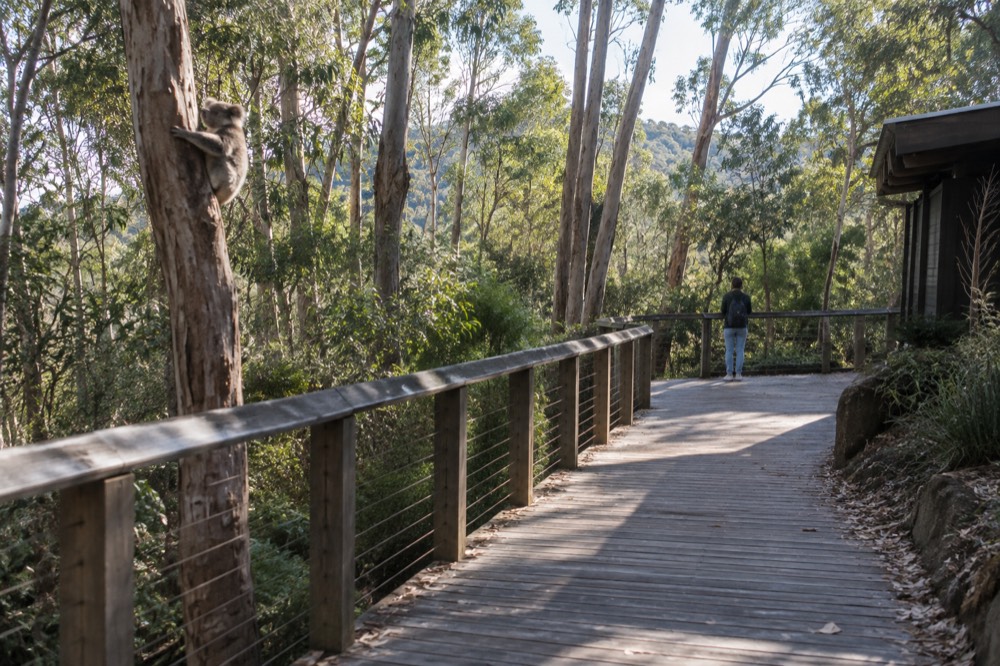
Yes, you can reach Healesville Sanctuary without a car, and it is one of the sanctuary's real advantages over many rival attractions. Take the train to Lilydale, then connect to the route 685 bus, which gets you to Healesville in roughly 55 minutes of train travel plus 44 minutes on the bus. The bus route even has a stop pattern that ends at Healesville Sanctuary itself on its longest run. No other major Australian wildlife attraction inside a wine region is this reachable by public transport, and with fares halved statewide until 1 January 2027 the whole return trip caps at $5.70.
The detail matters. The Lilydale line runs from Flinders Street, taking a median 55 minutes on a direct service, and Lilydale is the end of the rail network. Beyond it, route 685, Lilydale to Healesville, has 39 distinct stops and takes a median 44 minutes end to end, with the longest pattern terminating at Healesville Sanctuary. A weekday in the current timetable carries 49 trips across both directions. Our guide to reaching the valley without a car covers the full picture, including the wine side, where the honest finding is that not one of route 685's 39 stops is named for a winery or cellar door.
Two fare facts make this cheaper than most visitors expect. Public transport across Victoria is half price for everyone from 1 June 2026 until 1 January 2027, with the full-fare daily cap falling from $11.40 to $5.70, so a Melbourne to Lilydale return caps at $5.70. And all passengers under 18 travel free statewide with a Youth myki. Both come from Transport Victoria's own announcement, and the half-price policy ends on 1 January 2027, after which the caps revert to $11.40 full fare and $5.70 concession.
The catch, and it is a real one, is what happens after the sanctuary. Healesville town is walkable from the sanctuary, and the Healesville Makers Quarter, established in March 2025, bands six producers together so visitors can reach wine, beer, gin and dining on foot within one block. But the cellar doors of Coldstream and Yering, the heart of the wine region, are 9.5 km and more past the end of the train line. Public transport gets you to the sanctuary comfortably. It does not get you around the wineries, which is exactly why driven tours exist, a point our guide to wine and wildlife tours works through in detail.
Pairing The Sanctuary With A Wine Day
The cleanest combination is a small-group tour that runs tastings in the afternoon and finishes with kangaroos at dusk, or a sanctuary morning followed by a hop-on hop-off wine bus in the afternoon. Either way, you see the animals at their most active while still enjoying the region's cellar doors. Both exist as real, bookable products in the valley. The first suits visitors who want everything handled, from $140.71 per person with hotel pickup; the second suits visitors who want to set their own pace after a morning with the animals, from $68.26. Both carry free cancellation.
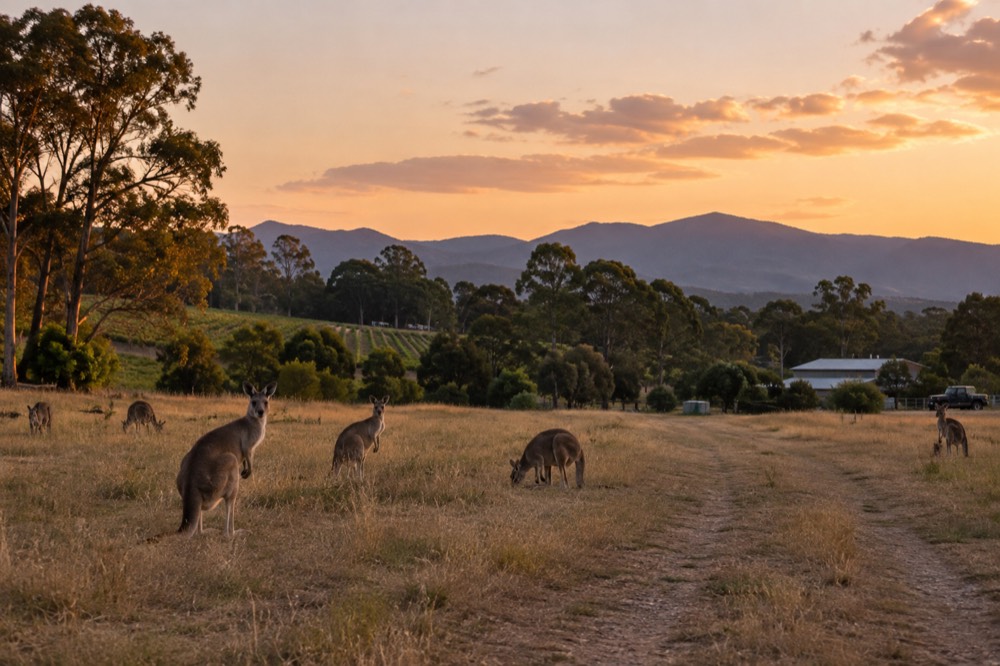
The Chandon, Sunset Kangaroo Safari tour is the standout for this purpose. It runs about seven hours, small-group, with hotel pickup, lunch optional and free cancellation, from $140.71 per person, rated 4.9 across 353 reviews. Its confirmed stops include Fresh Berry Co, Coldstream Dairy, Domaine Chandon, Yering Station and the Yarra Valley Chocolaterie and Ice Creamery, and the kangaroo encounter is the closing act rather than a mid-day gimmick. Kangaroos are most reliably seen at dawn and dusk, so an afternoon-to-sunset structure is not a marketing flourish, it is how the animals behave.
If you would rather do the sanctuary in the morning and the wine at your own pace afterwards, the hop-on hop-off approach is the alternative. The RED route wine bus runs 7 to 8 hours from Melbourne, from $68.26, rated 5 across 270 reviews, with free cancellation. It is a different product in every way: no guide walking you through tastings, no fixed lunch, just a circuit of winery stops you board and leave as you choose. Our guide to the hop-on hop-off wine tour explains how the route works and what it does not cover.
One planning note that belongs in exactly one place, here: Victoria's drink-driving limit is 0.05, and the offence is committed at 0.05 or more, not above it. A visitor on a full overseas licence is on 0.05, not zero. The infringement route for a first offence below 0.07, for a driver 26 or older on a full licence, still means three months off the road. That is the entire, honest reason driven wine tours and wine buses exist in this region, and it applies whether your day starts at a cellar door or at a sanctuary gate.
Which Option Should You Actually Book?
Book the sunset kangaroo safari if you want one ticket for the whole day, the hop-on hop-off bus if you want freedom after a sanctuary morning, and a private custom day if you want both stops on your own schedule. All three are real products with free cancellation. The private option costs more, from $642.58 for up to eleven guests, but it is the only one where the sanctuary and the cellar doors share one itinerary you control from start to finish.
The private route deserves a sentence of explanation, because it is often dismissed on price alone. Split across a group of six to eleven, the per-person cost lands in the same range as premium small-group days, and a custom winery day can be built around a sanctuary visit in a way no shared tour timetable allows. Whether that flexibility is worth it depends on your group, your budget and how much of the day you want to spend with kangaroos rather than Chardonnay.
For most visitors, though, the decision is simpler than it looks. The sunset safari wins on effort, the bus wins on flexibility and price, and the private day wins on control. Whichever you choose, the sanctuary half of the day is the part no other Australian wine region can offer: a world-significant platypus and honeyeater institution, in bushland, at the end of a train line. The trio below covers all three approaches one more time, side by side.
Common Questions
What Is The Best Wildlife Sanctuary In Australia?
There is no official ranking, but Healesville Sanctuary in Victoria has the strongest documented case: the Helmeted Honeyeater breeding program that established a third wild population in May 2025, world-first platypus breeding, and the new Australian Platypus Conservation Centre. It sits inside the Yarra Valley wine region, 67 km from Melbourne.
How much does Healesville Sanctuary cost?
Adult admission is from $58.00, concessions from $44.00, seniors from $52.50, and children aged 4 to 15 from $29.00 on weekdays. Children enter free on weekends, public holidays and Victorian Government school holidays. Prices are on the Zoos Victoria tickets page and should be checked before you go.
Can you get to Healesville Sanctuary by public transport?
Yes. Take the Lilydale line train from Flinders Street, a median 55 minutes on a direct service, then route 685 bus towards Healesville, a median 44 minutes end to end. The bus's longest stop pattern terminates at Healesville Sanctuary itself.
Is Healesville Sanctuary good for children?
Yes, and it is unusually good value for families: children enter free on weekends, public holidays and Victorian school holidays, and under-18s travel free on all Victorian public transport with a Youth myki. The sanctuary is all-Australian wildlife in natural bushland, with walking tracks suitable for kids.
Can you combine Healesville Sanctuary with a wine tour?
Yes, and it is one of the few wildlife attractions in Australia where this works. A sanctuary morning pairs naturally with an afternoon of cellar doors, and the Chandon, Sunset Kangaroo Safari tour builds the whole day around that structure, finishing with kangaroos at dusk after tastings at Domaine Chandon and Yering Station.