How Do You Find A Good Cellar Door?
What separates a cellar door worth an hour from one worth ten minutes in the Yarra Valley, and how a curated tour route shortcuts the search.
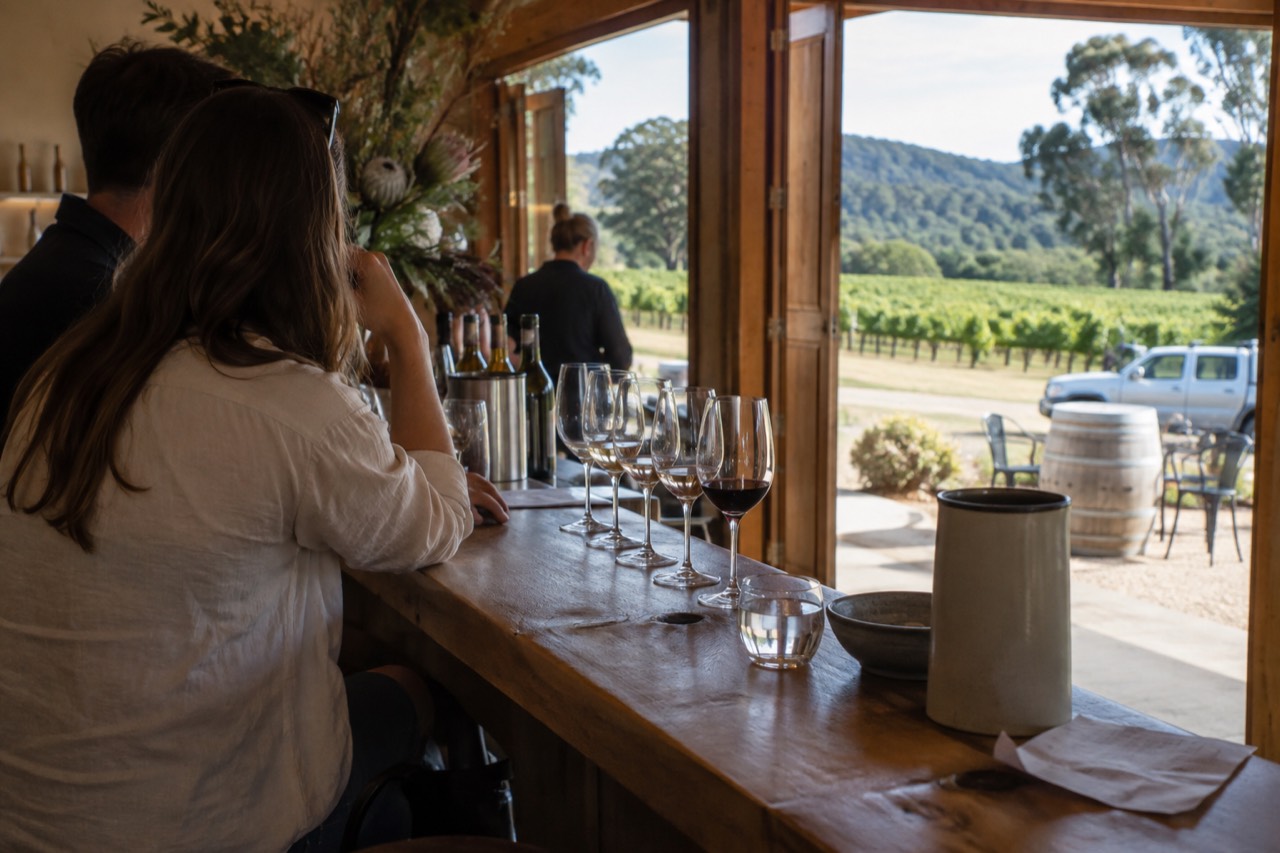
Innocent Bystander closed its Healesville cellar door in March 2025 and moved to a travelling pop-up model, with its communications manager telling reporters there are "no current plans to reopen a permanent cellar door in the region". Oakridge closed its fine-dining restaurant in June the same year. Storm Ridge Estate opened a new cellar door at Coldstream in May 2025, and Punt Road opened a purpose-built one in October. The Yarra Valley's cellar door landscape is not a fixed list you can memorise once. It churns, and the skill worth learning is not which door is "best" but how to judge one quickly, before you have spent half a day getting to it.
This site, Yarra Valley Wine Tours, exists because that judgement is genuinely hard to make from Melbourne. The region spreads across a legally defined area of 3,120 square kilometres, and the doors worth your time are scattered through it rather than clustered in one walkable strip, with one real exception in Healesville we will come to. What follows is the checklist approach: what to look for, what changed recently, and when it makes sense to let a tour operator's route do the filtering for you.
How Do You Find A Good Cellar Door?
A good cellar door is one where the wine is the point, the pourer can tell you where the fruit came from, and the visit survives contact with your actual day: reachable in your timeframe, open when you arrive, and selling something you cannot buy at a city bottle shop. Most mediocre doors fail on exactly one of those, usually the last. Judge the wine, the story and the logistics separately before you drive anywhere.
That three-part test sounds obvious, and it is, but almost nobody applies it in order. People pick a cellar door because a friend mentioned it, or because it appears high in a search result, and only then discover it sits 40 minutes past everywhere else on the route. Reverse the order. Logistics first: a door that breaks your day is a bad door no matter how good the pinot is. Story second: a tasting where nobody can tell you which block the grapes came from is a retail experience with a view. Wine third, and only third, because the wine quality in this region is broadly high and rarely the deciding variable between two doors ten minutes apart.
The region gives you a useful structural shortcut here, too. Wine Australia's education material divides the Yarra Valley into a Lower Yarra and an Upper Yarra half, and the two grow different things in different soils at different elevations. A door in the cooler, higher east end will pour you a different style of pinot noir than one on the valley floor near Coldstream. Knowing which half of the region you are standing in is already half the judgement made.
If the filtering work sounds like a job you would rather not do on your holiday, a curated tour route is the legitimate shortcut: an operator who runs the same roads every week has already absorbed the closures and the openings, and a good one updates its stop list when the landscape moves. The three options below are the small-group and private formats that do that filtering most explicitly.
What Separates A Cellar Door Worth An Hour From One Worth Ten Minutes?
The doors worth an hour share three habits: they pour a vertical or a single-vineyard comparison rather than one wine of each colour, they staff the bar with someone who works the vintage or can name who does, and they give you a reason to sit down. A door worth ten minutes pours a standard flight, from staff reading a card, standing up, with the exit behind you. Time-worthiness is a design choice, not an accident.
Sit-down tastings, comparative pours and knowledgeable staff are the visible surface of a producer who takes the cellar door seriously as its own product rather than as a shop counter. The Yarra Valley's best producers have another tell: the wine on the tasting list is not the wine in the supermarket. Small producers who sell most of their allocation at the door, or through a wine club, are structurally more interesting to visit than brands whose cellar door stocks the same bottles you passed in the city. The region's fruit is genuinely expensive, averaging $2,535 per tonne in 2026 against a national average of $570, which means much of what is poured here never leaves the state in volume: only an estimated 20 per cent of the region's crush was exported in the year to June 2026, against 68 per cent nationally. The door is where the rest of it lives.
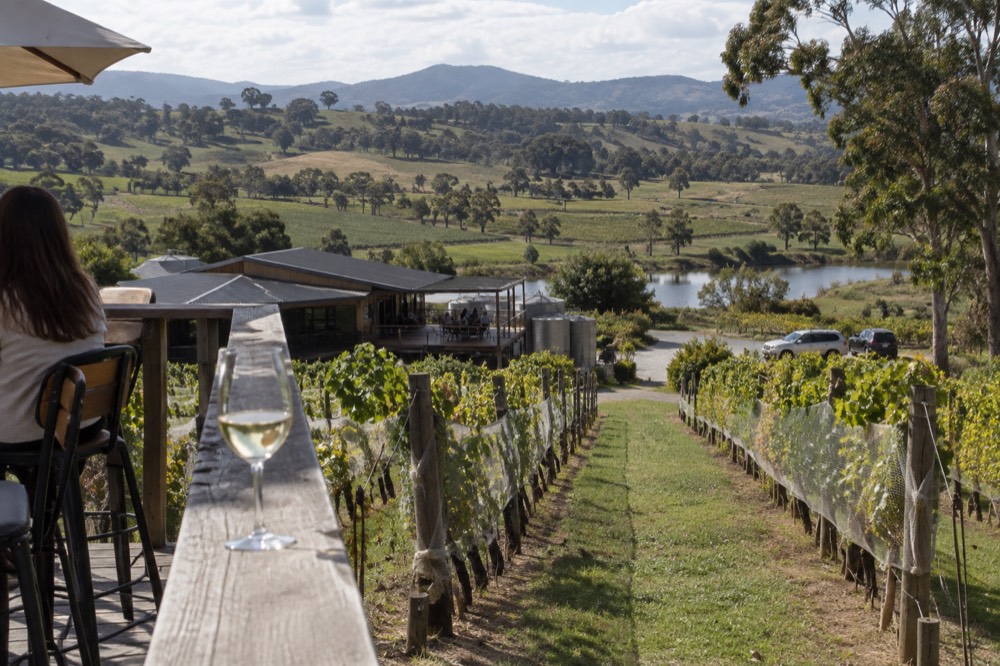
A practical pre-visit checklist, in the order we would apply it:
| Check | What you are testing | Where to look |
|---|---|---|
| Current trading status | Whether the door still exists | The producer's own site, not a search snippet |
| Which wines are poured | Whether the list differs from retail | The tasting list on the producer's page |
| Who pours | Whether staff can discuss vintage conditions | Reviews that name staff or mention vineyard detail |
| Sit-down or stand-up | Whether the visit has a pace | The listing's photos and recent reviews |
| Position on your route | Whether it fits the day's driving | A mapped route before you commit |
One more filter, and it is the honest one: your own palate. A door that specialises in chardonnay and pinot noir, as most of this region does, will disappoint a visitor who only drinks big reds, through no fault of the door. Pinot Noir was 44 per cent of the region's 2026 crush and Chardonnay 30 per cent, so the tasting you are offered almost everywhere will lean cool-climate. If that is not your style, say so early in the day and pick your doors accordingly; the region grows shiraz and cabernet too, in smaller volume, and a door that pours them well is worth seeking out rather than stumbling into.
Which Yarra Valley Cellar Doors Changed Recently?
The honest answer is that several moved in 2025, and any list older than that is unreliable. Innocent Bystander closed at Healesville in March 2025, Oakridge's restaurant closed in June, Storm Ridge Estate opened at Coldstream in May, Punt Road opened a purpose-built door in October, and Dino Giammarino relocated to Healesville. Treat every stop list as perishable and re-check before you drive.
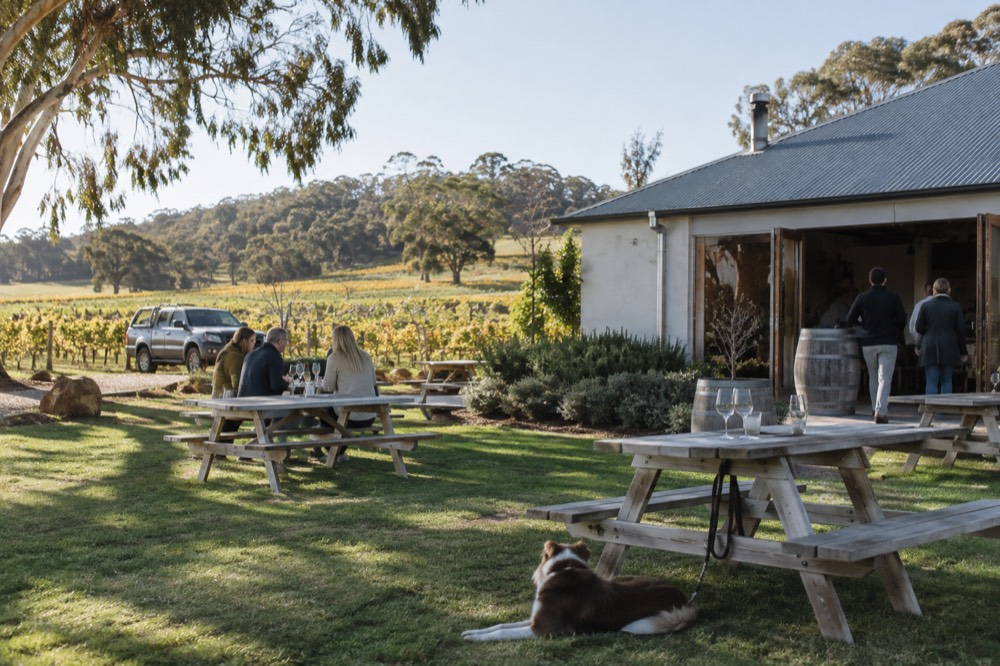
The churn has a pattern worth noticing. Closures and openings cluster around Healesville and Coldstream, the two towns where visitors actually spend time, and the newest arrivals are deliberately casual: Storm Ridge pitched itself with picnic tables on the lawn and a kids-and-dogs-welcome format, a visible move away from the hushed tasting room of old. The most consequential single development for the visitor without a car is Healesville Makers Quarter, established in March 2025, which bands six producers together in an industrial precinct so that wine, beer, gin and food sit within one walkable block. It is the only genuinely walkable tasting cluster the region has, and it changes the calculus for anyone planning a day around Healesville. The changes were reported by Good Food in August 2025, and Punt Road's own page on its new Coldstream cellar door confirms the October opening at 12 St Huberts Road, 400 metres from its original home.
The practical lesson is not to memorise this list either, because it will date too. The lesson is to prefer sources that name their dates. A blog post that says "here are the best cellar doors" without saying when it was written is exactly how people end up at a door that closed eighteen months ago. Our own answer to the question of scale, how many wineries are in the Yarra Valley, goes into why even the count itself is unreliable, and the same caution applies to any list of doors. If you would rather not do that re-checking work yourself on the day, a tour operator's confirmed stop list is the shortcut, because an operator who stops at a closed door has a bigger problem than you do.
Should You Plan Your Own Route Or Take A Tour?
Plan it yourself if you have a car, a full day and two or three specific producers you already want to visit. Take a tour if any of those three is missing, or if you want to taste at more than two doors, because Victoria's 0.05 limit is an offence at 0.05 exactly, not above it, and a full licence holder who drinks at three doors and drives is gambling with a three-month disqualification.
The drink-driving arithmetic is not a footnote here, it is the entire reason the driven tour product exists. Victoria's general limit is 0.05 grams of alcohol per 100 millilitres of blood, and the offence is committed at that concentration or more, so there is no buffer. A first infringement at 0.05 to under 0.07, for a driver 26 or older on a full licence, still means three months off the road, automatic, without a court appearance. A visitor on a full overseas licence is on 0.05, not zero, provided the licence is not provisional and they have not lived in Victoria for twelve months or more. Two cellar doors with a shared driver is comfortable. Three, self-driven, is not a plan, it is a hope.
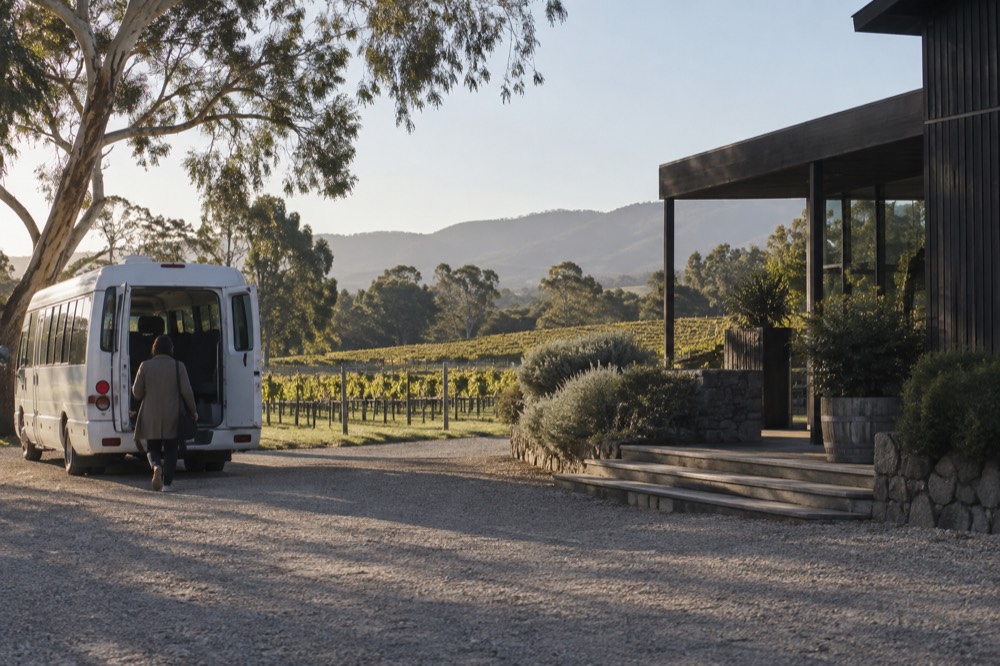
The middle path is a small-group day where the route is already filtered. The Yarra Valley Wine Tasting Day Tour from Melbourne caps its group at eleven guests, includes lunch and hotel pickup, runs about six and a half hours, and is rated 5.0 across 6 reviews, from $131.45. Yering Station is a confirmed stop, and it is a door that passes the hour test easily: a historic property with vineyards the staff can point at from the tasting room. For a fuller comparison of the format, our guide to small-group Yarra Valley wine tours breaks down what the cap on guest numbers actually buys you.
How Do You Judge A Cellar Door Before You Arrive?
Read the tasting list, not the star rating. A door that pours a range of its own wines across vintages or blocks is telling you it takes the visit seriously; a door whose list is one wine per colour is telling you the visit is a formality. Then read recent reviews for the words that matter: staff who explain, time to sit, and no pressure to buy. Those three phrases predict a good hour better than any score.
Reviews reward caution in both directions. A door with thousands of reviews is established but may run a conveyor belt; a door with a handful of reviews may be new, or simply quiet, and neither is a verdict. What matters is recency and specificity. A review from this year that says the pourer walked the group through the vineyard is worth twenty undated five-star ratings, and a review complaining that the door was closed despite the listing is worth more than any of them, because it tells you the information chain is broken somewhere. Cross-check the producer's own page against whatever listing sent you there, and if the two disagree on the basics, trust neither and move on.
There is also a structural signal most visitors miss: whether the producer is a member of the region's peak body. Wine Yarra Valley, the growers and winemakers association, has 90 members ranging from large global brands to small artisan producers, and membership is a modest but real signal that the operation is engaged with the region's institutions rather than operating at their edge. The association's own membership page states the count and the mix. It is not a quality guarantee, and the association itself is between leaders at the moment, with an Interim President and a vacant Vice Presidency, so treat it as one signal among several rather than an endorsement.
If your own filtering keeps landing on doors that do not fit one driving day, the alternative is to hand the whole route over. A build-your-own private winery day lets you pick the producers and puts a driver behind the wheel for the full eight hours, from $642.58 for the vehicle, rated 5.0 across 6 reviews. It is the format for the visitor who has done the research and wants the logistics solved rather than delegated.
When Is A Door Better As Part Of A Curated Route?
A door is better as part of a route when it is hard to reach, hard to book or hard to pace: small producers with limited pouring hours, doors tucked up the valley past the bus network, and wines that never appear on a walk-in list. A tour with a standing relationship at those doors gets you a visit you could not arrange alone, and the driver handles the 0.05 problem throughout.
The region's public transport makes the point bluntly. The train stops at Lilydale and nothing rail-based goes further; the bus route to Healesville has 39 stops and not one of them is named for a winery or cellar door, coming closest only at TarraWarra. A door that is genuinely good but genuinely remote is, for a visitor without a car, effectively closed. Curated routes exist precisely to convert those doors from unreachable into routine, and the best ones also solve pacing: a good route gives you 45 minutes at the door where the winemaker is worth listening to, not 25 minutes at four doors in a row. For the wider picture on visiting without driving at all, see getting to the Yarra Valley without a car.
The premium end of the curated market does the filtering most visibly. The Ultimate Yarra Valley Chandon, Soumah and De Bortoli Cheese and Wine tour, for instance, strings together three of the region's most recognisable doors with lunch included, in a small-group format, rated 4.8 across 334 reviews. It is a route built entirely from doors that pass the hour test, which is the point: someone has already run the checklist for you.
What Should You Never Rely On When Picking A Cellar Door?
Never rely on an undated list, a winery's own superlatives, or a review count as a quality measure. Undated lists send you to closed doors, self-declared rankings are marketing, and review volume rewards longevity and bus parking over the quality of the pour. Rely instead on the producer's own current page, recent specific reviews, and a route, self-planned or curated, that you have checked against this year's openings and closures.
The undated-list problem is not theoretical on this site's home turf. The region's own association publishes a marketing timeline with dates that its institutional sources do not confirm, and the gap between the two is a standing lesson in attribution: the Good Food report on the region's 2025 changes is more useful than a dozen evergreen "best cellar doors" listicles precisely because it names its month. Apply the same standard to anything you read, including us: a claim about a cellar door without a date attached to it is a claim about a cellar door at some unspecified time, which is barely a claim at all.
That is also why the tour format keeps winning for a first visit. You can spend an evening cross-checking six doors against six producer pages, and if you enjoy that, the region rewards it. But if your visit is one day out of a Melbourne trip, the filtered route, whether that is the eleven-guest tasting day with lunch, the Chandon, Soumah and De Bortoli small-group day, or a private build-your-own day with a driver, converts the same research hours into tasting hours. The three formats below cover that spectrum.
Common Questions
How Do You Find A Good Cellar Door?
Judge the wine, the story and the logistics separately, in that reverse order of importance to your day: check the door still trades and fits your route, look for pours that differ from the retail range and staff who can discuss the vineyard, and prefer sources that name their dates. A curated tour route is the shortcut when you would rather not run the checklist yourself.
What makes a cellar door worth an hour rather than ten minutes?
Sit-down tastings, comparative pours such as a vertical or a single-vineyard flight, and staff who can name where the fruit came from. A door that pours one wine of each colour, standing up, from staff reading a card, has designed a ten-minute visit, and no view changes that.
Do cellar doors in the Yarra Valley close often?
Yes, the landscape moves. Innocent Bystander closed its Healesville cellar door in March 2025, Oakridge closed its restaurant in June that year, while Storm Ridge Estate and Punt Road both opened new Coldstream doors in 2025. Re-check any stop list against the producer's own page before you drive.
Can you visit cellar doors without a car?
Only in a limited way. The train ends at Lilydale and the bus route to Healesville has no stops named for wineries, though Healesville Makers Quarter puts six producers within one walkable block. For anything spread out, a driven tour or a private driver is the practical answer.
Is it safe to drive yourself between cellar doors?
Not beyond one or two doors with modest tasting. Victoria's limit is 0.05 and the offence is committed at 0.05 or more, so there is no buffer, and a first infringement for a full-licence holder 26 or older still means three months off the road. A visitor on a full overseas licence is on 0.05, not zero.
Are tour stop lists more reliable than online guides?
Generally yes, because an operator that stops at a closed door loses customers, so it has a direct commercial reason to keep its route current. Check that the stops on a listing are described as confirmed rather than optional, since some tours include stops as upgrades or choices rather than promises.