What's The Best Time To Visit Yarra Valley Wineries?
A month-by-month look at the conditions that actually change a Yarra Valley winery day: the late-summer harvest window, winter fog and open fires, and the January heat that argues for an early departure.
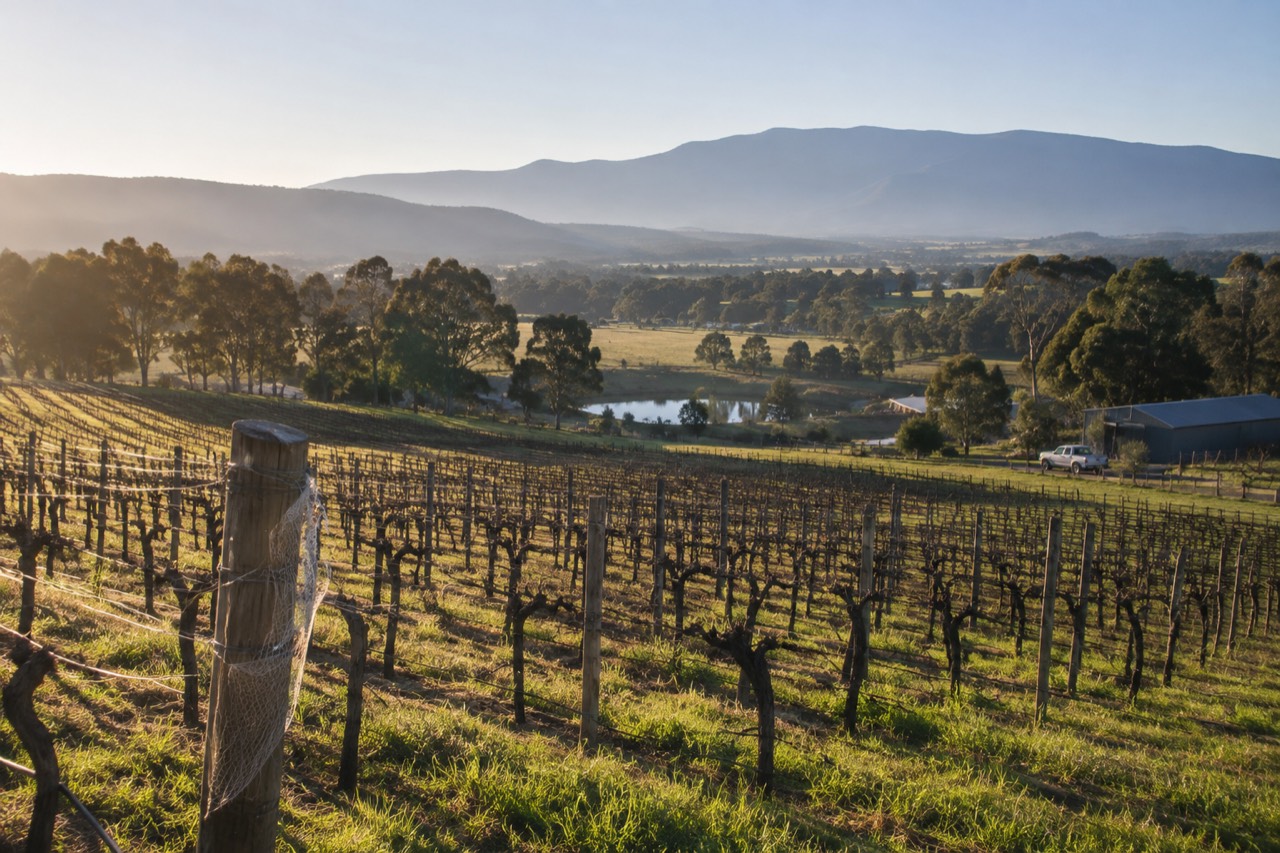
What's The Best Time To Visit Yarra Valley Wineries?
The best time is late February to April, when harvest activity fills the wineries and the heat has usually broken, or June to August if you want fog, open fires and the quietest cellar doors. Summer is the most reliable weather but January is the hottest month, with a mean maximum of 28.2 degrees C at Coldstream, so book a departure that reaches the first tasting before the afternoon heat builds.
Every season here trades one thing for another, and the trade is measurable rather than a matter of taste. The Bureau of Meteorology's long-running station at Coldstream, on the valley floor, records 31 years of monthly data, and it shows a region with hot, dry summers, mild autumns, genuinely cool winters and a spring that is the wettest part of the year. That curve is what a winery day actually feels like, and it is a better planning tool than any "best time to visit" list that ignores it.
The wine calendar matters too. Harvest is the one period when a winery is visibly working rather than just pouring, and in the 2025 vintage Yering Station brought its first grapes into the winery on 7 February and had all of its chardonnay and pinot noir in by the end of that month. That is one producer's account of one vintage, not a regional schedule, but it gives a real sense of when the valley is at its busiest and most interesting. Wine Australia treats the growing season as October to April, which frames the whole story: the vines work through the warm half of the year and rest through the cold half.
If you already know the format you want, the season can shape which one serves you best. A hot January day argues for an early-starting standard tour with air-conditioned transport; a foggy July afternoon suits a small-group or private format that can linger by a fire.
How Does The Weather Change Through The Year?
Coldstream's record shows a clear pattern: January is the hottest month at a 28.2 degree C mean maximum, July the coldest at 13.5, October the wettest at 75.3 mm and February the driest at 46.5 mm. The valley averages 38.7 days a year at or above 30 degrees C, almost all of them in the warmer half of the year. Those numbers decide whether a tasting day feels pleasant or punishing.
The Bureau of Meteorology's Coldstream station, number 086383, has recorded since 1994, and its all-years statistics give the most honest monthly picture of the valley floor available. Two caveats travel with the data. It is a 31-year record beginning in a warmer, drier period than a long-run average would show, and it is one location: rainfall climbs steeply toward Healesville at the eastern end, where the closed Badger Creek station recorded a mean annual rainfall of 1,018.7 mm over 56 years against Coldstream's 754.8 mm about 11 km away. Never treat one number as "the valley's" weather.
| Month | Mean max (C) | Mean min (C) | Mean rainfall (mm) |
|---|---|---|---|
| January | 28.2 | 12.1 | 52.6 |
| February | 27.7 | 11.9 | 46.5 |
| March | 25.4 | 10.0 | 48.3 |
| April | 20.7 | 7.2 | 65.6 |
| May | 16.7 | 5.5 | 66.1 |
| June | 14.0 | 3.9 | 67.3 |
| July | 13.5 | 3.9 | 62.7 |
| August | 14.9 | 4.4 | 69.8 |
| September | 17.4 | 5.6 | 66.7 |
| October | 19.8 | 6.8 | 75.3 |
| November | 22.7 | 9.0 | 75.0 |
| December | 25.3 | 10.0 | 58.9 |
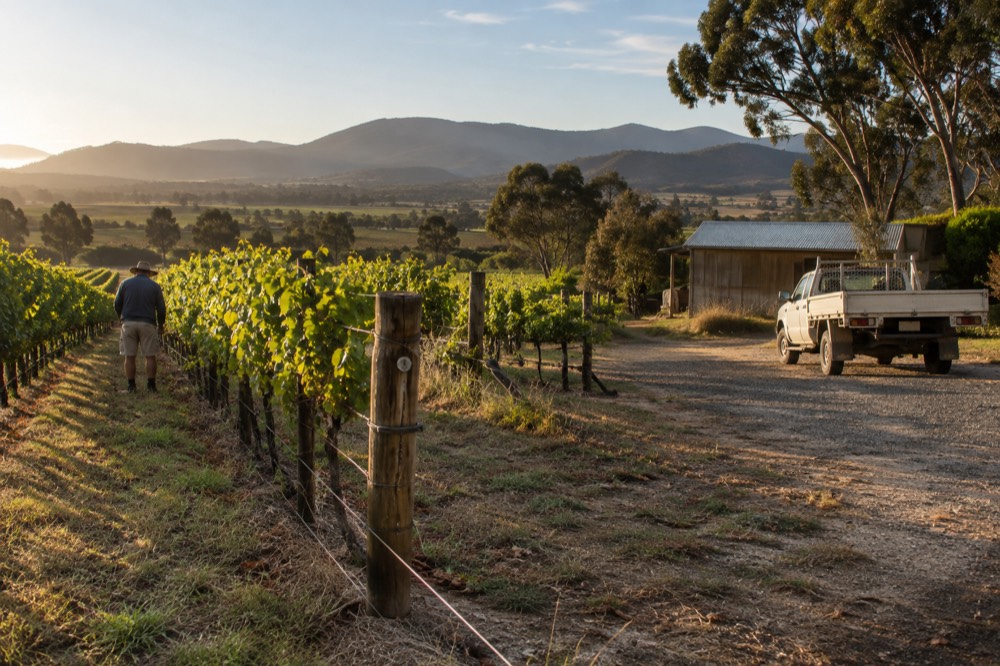
The heat is concentrated. January alone averages 11.5 days at 30 degrees C or more and 4.1 days at 35 or more, and the station's record high is 44.8 degrees C, set on 7 February 2009. A summer tour day is usually fine in the morning and can be genuinely uncomfortable after midday, which is why the strongest summer advice is simply to start early. The record low, for what it is worth, is minus 5.8.
Wine Australia's region snapshot adds a wider lens. The Yarra Valley's mean January temperature is 19.9 degrees C for the 2006-2025 average, against 18.3 for the 1961-1990 average, and the 2025-26 season alone came in at 21.0. Those are whole-region indices, and individual vineyards vary, but the direction is clear: this is a cool-climate region that is warming, and the summer heat is not an illusion.
Is Autumn The Best Season For A Wine Tour?
Autumn, roughly late February through April, is the strongest single answer. The mean maximum falls from 27.7 degrees C in February to 25.4 in March and 20.7 in April, rain stays moderate, and it is the period when wineries are harvesting, crushing and visibly at work. The trade-off is that it is also the busiest stretch of the valley's year, so book earlier and expect fuller cellar doors.
Harvest is the draw, and it is worth being precise about what can honestly be claimed. No official body publishes a regional harvest window, and this site does not invent one. What does exist is first-hand producer reporting. Yering Station's own vintage 2025 account describes first fruit arriving on 7 February, half the total crush processed within two weeks, and all chardonnay and pinot noir in by the end of February, with shiraz, cabernet and nebbiolo still coming in after mid-March rain. The producer called it an early, compressed harvest. A different vintage will run differently, and the 2026 season was described by Yarra Yering's Andrew Fleming as one of the most challenging he has worked, second only to 2011.
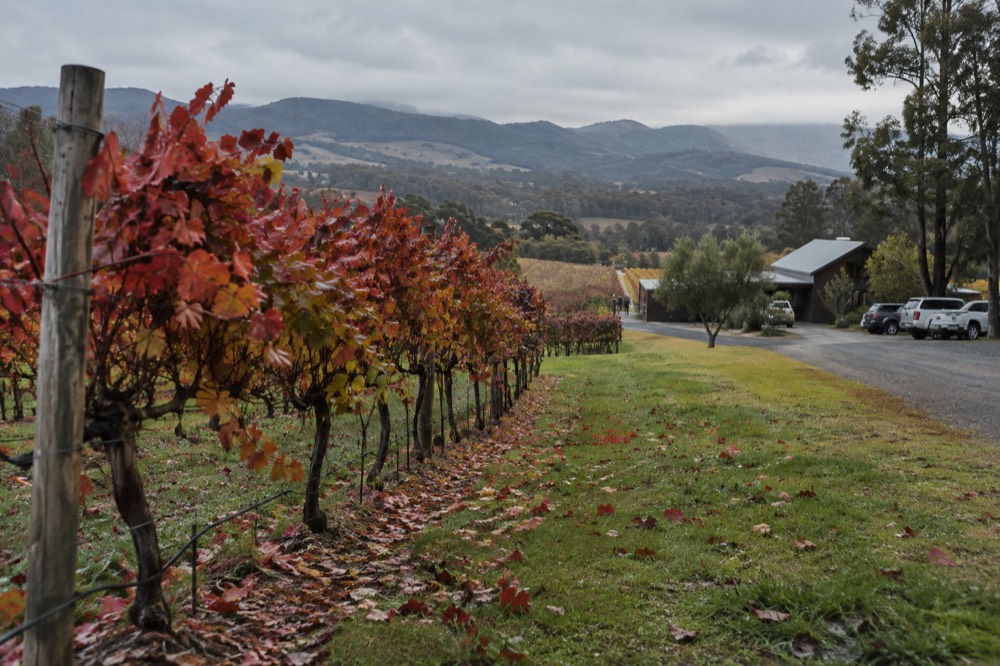
What harvest means for a visitor is atmosphere rather than access. You will not usually walk the crush floor, but the wineries are full of staff, the air smells of fermentation around the working buildings, and the vine leaves turn colour through March, which is when the valley photographs best. The 2026 crush was small, 6,766 tonnes estimated, down 31 per cent on 2025, after a season of cold and wet flowering, hail and rain at the wrong times. A small crop does not close cellar doors; it just makes the vintage story a more human one.
Autumn is also the season where a private format earns its price. A customized day lets you chase the wineries whose vineyards look best that week rather than a fixed loop, which matters when the colour changes fast. The trade-off is cost and availability: this is peak season, and the good drivers and good tables book out first.
If a private, build-your-own day sounds right for an autumn trip, it is worth checking availability early, because a custom itinerary with hotel pickup needs a driver committed to your dates. Free cancellation terms on the listing mean an early booking is not a locked-in one.
What Are Summer Wine Tours Like?
Summer is the most reliable weather of the year, with February the driest month at 46.5 mm mean rainfall, but it is also the hottest, and the heat is concentrated in the middle of the day. The workable summer plan is an early departure, tastings through the morning, lunch at the coolest hour you can manage, and a return that avoids the late-afternoon peak.
The numbers behind that advice are stark. Coldstream averages 38.7 days a year at or above 30 degrees C, and January contributes 11.5 of them on its own. The record high of 44.8 shows what the top end looks like. None of this makes summer a bad time to visit; it makes an 8 hours tour that starts early a very different experience from one that starts late. Check the departure time on the listing before you check the price.
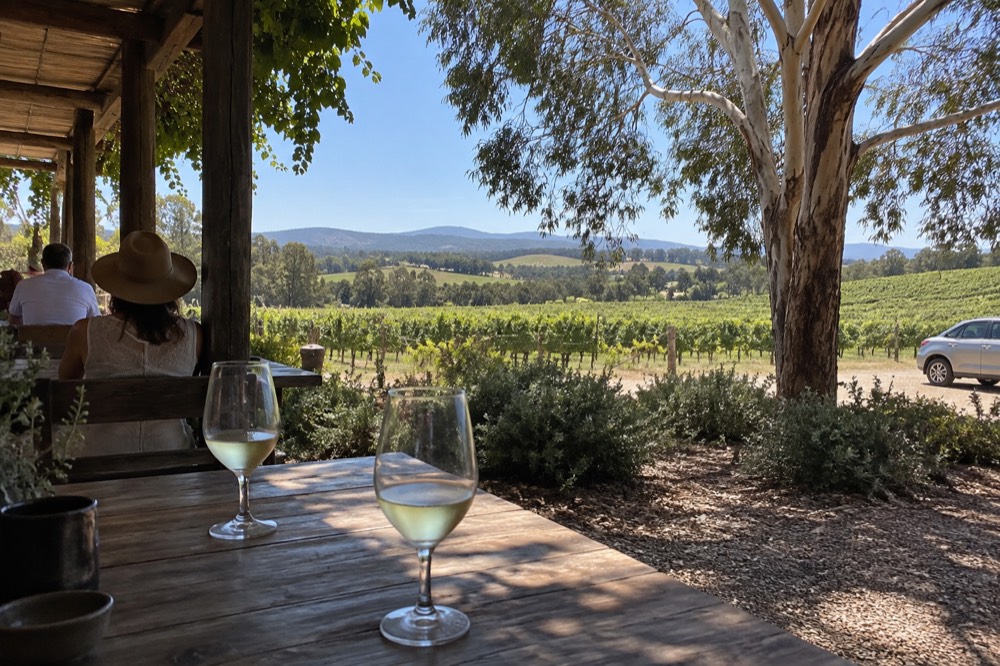
Summer also has a practical advantage the other seasons lack: daylight. A tour that leaves Melbourne around 8 or 9 am and runs eight hours gets you home before dark, and a late-afternoon stop at the Yarra Valley Chocolaterie & Ice Creamery, a confirmed stop on several standard tours, lands at the hour an ice cream actually makes sense. The summer crowd is real, though. The Yarra Ranges Council region accounts for 6.3 per cent of all day trippers across Victoria on the most recent figures, up from 5 per cent in 2018-19, and summer weekends carry a heavy share of them.
One summer caution that is worth a sentence rather than a paragraph: Victoria declares a Fire Danger Period each summer, with dates set by conditions and re-declared every year, and restrictions on lighting fires in the open apply throughout it. Check the current declaration on the CFA's site for the dates in the season you travel rather than assuming a fixed window. A tour day is rarely disrupted, but total fire ban days change what wineries can do outdoors.
Is Winter Worth It In The Yarra Valley?
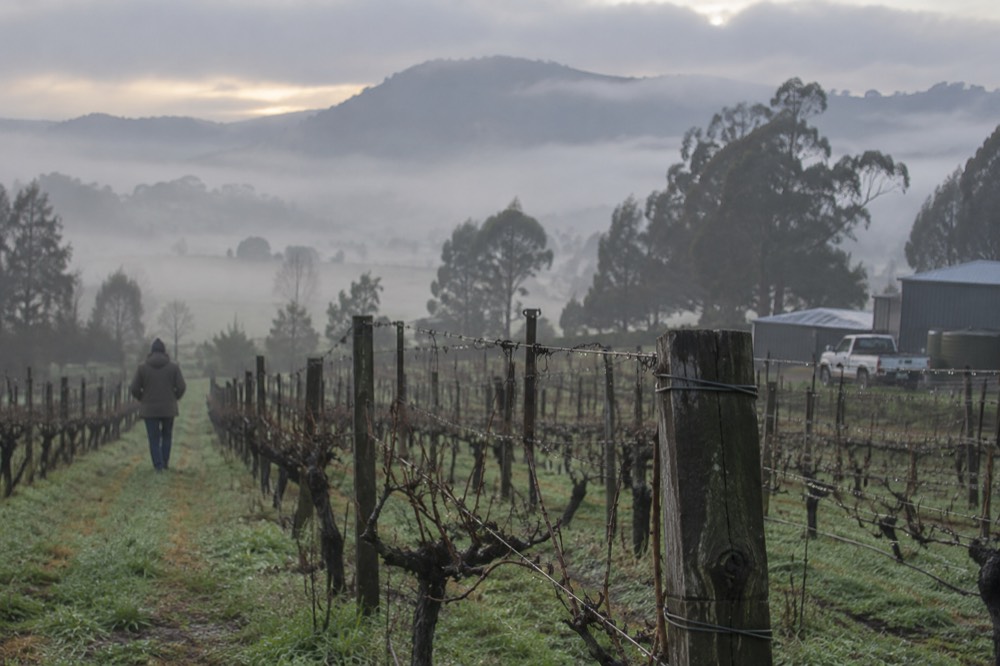
Winter is the valley's quietest and most atmospheric season, with July mean maxima of 13.5 degrees C and minima of 3.9, morning fog on the valley floor and cellar doors running open fires. You lose the vineyard colour and some daylight, and you gain the cheapest and emptiest tasting rooms of the year, plus the region's sparkling and heavier reds at their most welcome.
The fog is real and it is the season's signature. Cold mornings with minima under 4 degrees C produce valley-floor mist that burns off through the morning, and a tasting room with a fire is the natural endpoint of a drive through it. Winter is also when the region's walkable Healesville precinct earns its keep: Healesville Makers Quarter, established in March 2025, bands six producers together within one block, so wine, beer, gin and dining can be reached on foot, which is a genuinely different proposition from the drive-between-wineries day.
Winter also suits formats that summer does not. An evening private tour that pairs wine and whisky with a two-course dinner, running 5 to 6 hours with hotel pickup, is a product that only makes sense when the sun sets early and a fire is lit. The valley's dark hours are a real part of its winter appeal, and a dinner tour is the way to buy them without driving.
The trade-offs are honest ones. Days are short, so a 10-hour day tour is harder to fill with daylight, and the vineyards are bare, which matters if photographs are part of the plan. Rain is steady rather than dramatic, 62.7 to 69.8 mm per month from June to August, so pack a layer rather than an umbrella strategy. What you get back is space: cellar door staff with time to talk, tables without bookings, and the region's pinot noir and sparkling poured on the days they were made for.
What About Spring And Weekends?
Spring, September to November, is the greenest and wettest part of the year, with October the wettest month at 75.3 mm and November level at 75.0, and mean maxima climbing from 17.4 to 22.7 degrees C. It is a good season for vineyard scenery and a poor one for guaranteed outdoor lunches, and weekends are busier than weekdays in every month of the year.
Spring is when the vines wake, and Wine Australia's growing season definition, October to April, tells you exactly when: the region's growing season rainfall for 2025-26 was 607 mm calculated October to April. Budburst and early shoot growth make the vineyards look their freshest, and the temperatures are mild enough that a full day outside is comfortable. The catch is that the rain comes with the green. If an outdoor long lunch is the centrepiece of your plan, spring is a gamble and February or March is the safer bet.
Weekends deserve their own line in every season. The day-tripper share figures above are annual, but the pressure concentrates on Saturdays, and a Sunday is usually the calmer of the two weekend days. A weekday visit, in any month, is the single cheapest way to make a cellar door feel private without paying for a private tour. If your dates are fixed to a weekend, book a tour with a guaranteed seat and a hotel pickup rather than planning to drive yourself, and read the drink-driving rules before you consider the alternative: Victoria's limit is 0.05, the offence is committed at 0.05 or more, and it is a true zero for learner and probationary licence holders, while a visitor on a full overseas licence is on 0.05, not zero.
A private custom day is the format that bends furthest around a fixed weekend, because it takes your dates as given and builds the stops around them rather than around a published schedule. For a group of up to eleven with a driver and hotel pickup, it is the one product on the roster where the season and the day of the week are inputs rather than constraints.
How Do You Plan Around The Season You Choose?
Match the format to the month: early-starting standard tours in summer, harvest-season bookings made well ahead in autumn, fire-lit small-group or evening formats in winter, and a rain plan in spring. Check the departure time, the cancellation terms and the confirmed stop list on the live listing, because the season decides the day more than the price does, and free cancellation on every tour in this roster means an early booking costs you nothing to change.
A simple way to hold the whole article in one place:
| Season | Months | Conditions | Best-fit format |
|---|---|---|---|
| Summer | Dec to Feb | Hottest and driest; Jan mean max 28.2 C | Early-start standard tour, air-conditioned transport |
| Autumn | Mar to May | Harvest activity, vine colour, peak crowds | Private or small-group day, booked early |
| Winter | Jun to Aug | Fog, fires, quiet rooms, 13.5 C July mean max | Evening dinner tour or fireplace small-group day |
| Spring | Sep to Nov | Greenest and wettest; Oct 75.3 mm | Flexible itinerary with indoor stops |
Two final planning points carry real weight. First, the valley's cellar door landscape changed materially in 2025: Innocent Bystander closed its Healesville cellar door in March, Oakridge closed its fine-dining restaurant in June, Storm Ridge Estate opened at Coldstream, and Punt Road opened a purpose-built cellar door at Coldstream in October. Old blog posts and old itineraries are stale in a way that a tour operator's current confirmed stop list is not, which is a concrete reason to trust a live listing over a printed itinerary. Second, whatever the season, book the driven day. The 0.05 limit and its consequences, including automatic three-month cancellations for a first low-range infringement, are the quiet argument for every tour on this site, in every month of the year.
For more on shaping the day itself, the Yarra Valley winery tour itinerary guide works through stop order and timing, and what to wear on a Yarra Valley wine tour covers the layering question that winter and spring both raise. This site, Yarra Valley Wine Tours, keeps the seasonal detail current across all of its guides.
Common Questions
What's The Best Time To Visit Yarra Valley Wineries?
Late February to April for harvest energy and vine colour, June to August for fog, fires and quiet cellar doors. Summer is the most reliable weather but January is the hottest month at a 28.2 degree C mean maximum, so an early departure matters more there than in any other season.
Is winter too cold for a wine tour?
No. July's mean maximum is 13.5 degrees C and the mean minimum 3.9, cold enough for fog and fires but not for snow or closures. Winter is the quietest and often cheapest season, and evening dinner tours only really make sense in these months.
When is grape harvest in the Yarra Valley?
No official regional harvest window is published, so treat any firm dates you read with suspicion. One documented example: Yering Station's first 2025 fruit arrived on 7 February and all its chardonnay and pinot noir was in by the end of February. Late February into March is the safest general expectation, but each vintage differs.
What is the wettest month in the Yarra Valley?
October, at a 75.3 mm mean at Coldstream, with November effectively level at 75.0 mm. February is the driest at 46.5 mm. Rainfall also rises toward the eastern end of the valley, so Healesville is wetter than Coldstream on the same day.
Are weekends much busier than weekdays?
Yes, in every season. The Yarra Ranges region accounts for 6.3 per cent of Victoria's day trippers, and that pressure concentrates on weekends. A weekday visit is the cheapest way to get a quiet tasting room without paying for a private tour.