What Is The Best Time To Visit Yering Station?
Season by season advice for visiting Yering Station in the Yarra Valley, including the quiet windows, vintage timing, and which tours build this cellar door into the day.
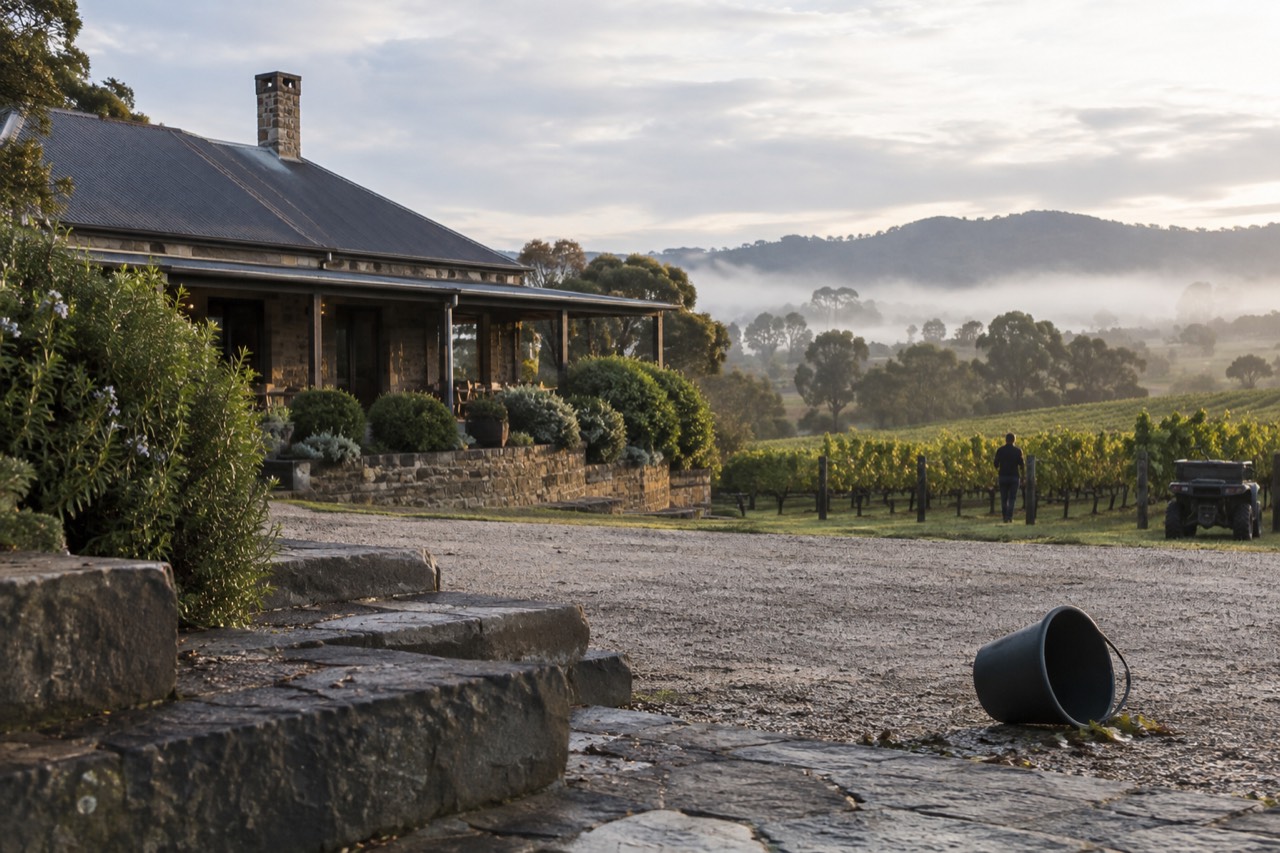
Yering Station is one of the oldest names in Victorian wine. Heritage Victoria records the property, now Chateau Yering, on the Victorian Heritage Register and describes it as "the first known vineyard in Victoria, vines having been planted there in the late 1830s". That history, plus a working cellar door, a restaurant and a vineyard landscape that photographs well in every season, makes it one of the most visited stops in the valley. The question of timing is genuinely worth thinking through, because the experience in February and the experience in July are almost different products.
This guide works through the year at Yering Station: what the weather actually does at this end of the valley, when the vines are at their most interesting, when the crowds thin out, and which tours already build this cellar door into their route so you are not relying on a self-drive day.
What Is The Best Time To Visit Yering Station?
The best time to visit Yering Station is autumn, March through May, when harvest is freshly finished or finishing, the vineyard turns colour, and the weather sits around a 20.7 C mean maximum in April against 28.2 C in January. Weekday mornings in any season are the quiet windows. Spring, October and November, is the greenest and wettest alternative, and winter is the quietest of all if you want the tasting room almost to yourself.
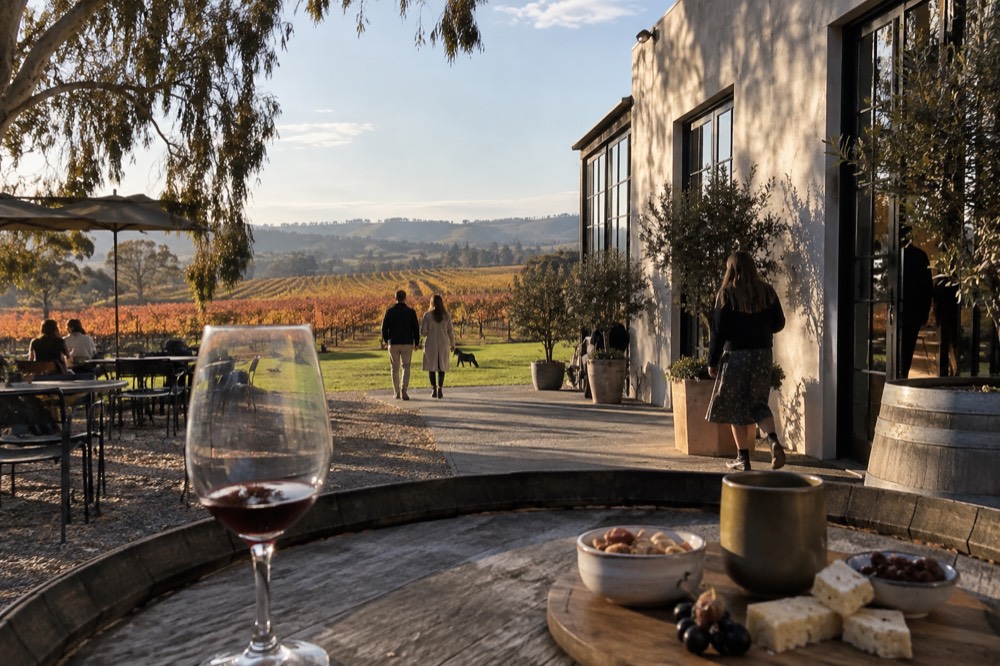
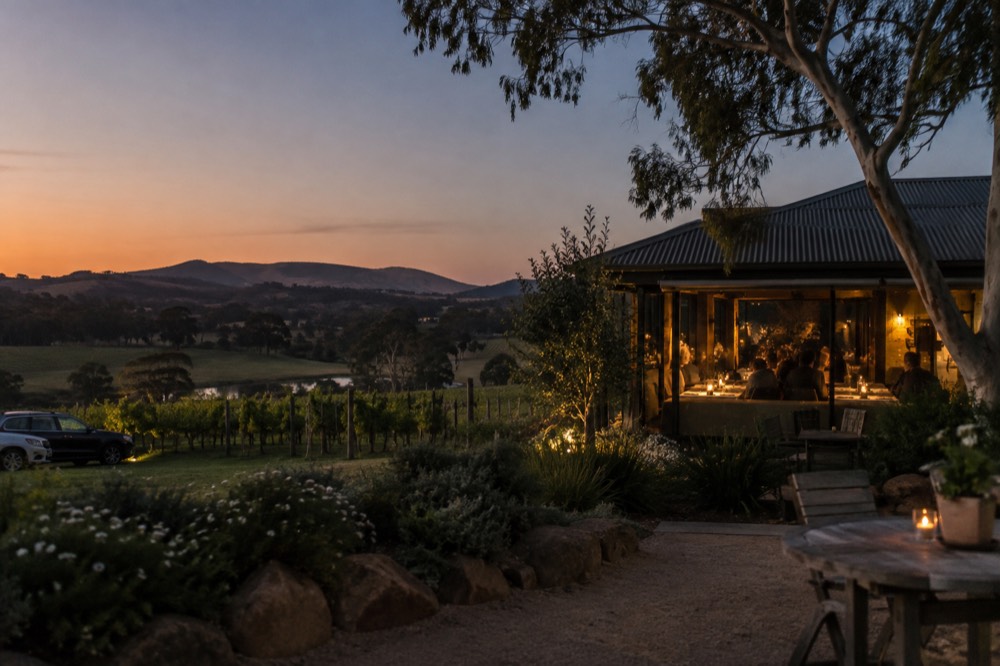
The honest answer has three layers, and most guides only give you one. The first layer is the weather. The Bureau of Meteorology's Coldstream station, which sits a few kilometres from Yering Station and has recorded since 1994, gives the clearest picture of what a day here actually feels like. The second layer is the vineyard itself. Grapevines are deciduous, so the view from the cellar door changes more dramatically than most visitors expect: bare and structural in winter, bright green in spring, heavy and shaded in late summer, and red-gold in autumn. The third layer is crowds, and that one is driven by Melbourne. The Yarra Ranges Council region now accounts for 6.3 per cent of all day trippers across Victoria, up from 5 per cent in 2018-19, and a large share of that traffic lands on weekends.
Layer those together and autumn weekdays win. You get the best-looking vineyard, the most comfortable temperatures, and the post-harvest calm that comes when the crush is in the winery. If you cannot do a weekday, an early start on a Saturday beats a Sunday afternoon, because day trippers tend to arrive from Melbourne later in the day and the drive is about 51 km from the CBD, under an hour at free-flow but longer in weekend traffic.
If you are planning a wider trip, our guide to the Yarra Valley Wine Tours homepage lists every tour format that runs here, and the seasonal advice in the best months for Yarra Valley wineries covers the rest of the region.
How Does The Weather Actually Behave At This End Of The Valley?
Coldstream, the station closest to Yering Station, averages a 28.2 C mean maximum in January, the hottest month, and 13.5 C in July, the coldest. October is the wettest month at 75.3 mm, February the driest at 46.5 mm, and the area averages 38.7 days a year at or above 30 C. Rainfall also climbs as you move east up the valley, so Healesville, 11 km away, is historically wetter than Coldstream.
Those numbers come from the Bureau of Meteorology's long-run statistics for the Coldstream automatic weather station, station 086383, which has recorded continuously since 1994 and is the only station in the region still flagged as an active automatic station. You can read the full monthly tables on the Bureau's Coldstream climate averages page.
| Month | Mean max (C) | Mean min (C) | Mean rainfall (mm) | What it means for a visit |
|---|---|---|---|---|
| January | 28.2 | 12.1 | 52.6 | Hot, busiest, harvest may be starting |
| February | 27.7 | 11.9 | 46.5 | Driest month, harvest in full swing |
| March | 25.4 | 10.0 | 48.3 | Warm days, cooling nights, late harvest |
| April | 20.7 | 7.2 | 65.6 | Comfortable, vineyard colour begins |
| May | 16.7 | 5.5 | 66.1 | Cool, quiet, leaf colour at its peak |
| June | 14.0 | 3.9 | 67.3 | Cold mornings, very quiet |
| July | 13.5 | 3.9 | 62.7 | Coldest month, bare vines |
| August | 14.9 | 4.4 | 69.8 | Cold, damp, occasional frost |
| September | 17.4 | 5.6 | 66.7 | Budburst, green returning |
| October | 19.8 | 6.8 | 75.3 | Wettest month, vivid green |
| November | 22.7 | 9.0 | 75.0 | Warm, spring growth everywhere |
| December | 25.3 | 10.0 | 58.9 | Warm, pre-harvest build-up |
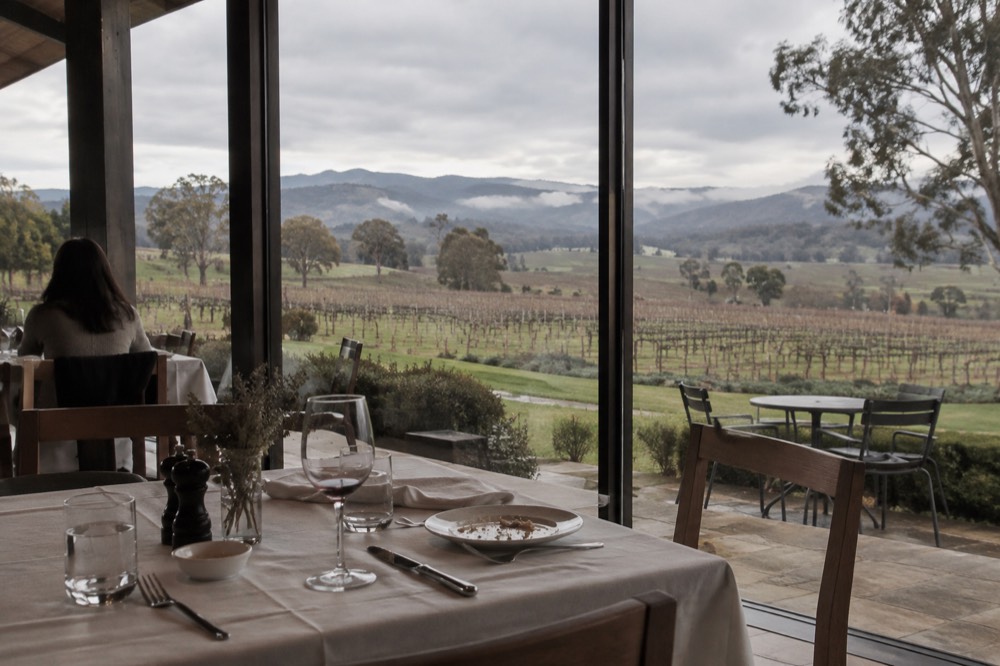
Two practical notes sit behind that table. First, the heat is real: January alone averages 11.5 days at 30 C or more and 4.1 days at 35 C or more at Coldstream, so a midsummer afternoon tasting can be a hot, thirsty exercise rather than a relaxed one. Second, the rainfall gradient matters if your day includes more of the valley. The historical Healesville station at Badger Creek recorded a mean annual rainfall of 1,018.7 mm over 56 years, against Coldstream's 754.8 mm about 11 km west. The eastern, upper end of the valley is simply a wetter place, and a day that starts fine at Yering Station can be drizzling an hour's drive later.
Winter deserves a better reputation than it gets. Yes, the vines are bare and the mean maximum is 13.5 C in July. But the cellar door is warm, the crowds are a fraction of summer's, and the region's food and fireplaces come into their own. Several operators lean into this: Hop It, the hop-on hop-off wine bus, ran a limited winter route in 2026 built around cellar doors with fireplaces, which tells you the winter market is real even if that particular route was a limited run.
When Is Harvest, And Does It Change The Visit?
Harvest timing varies by season and no published regional window exists, but Yering Station's own 2025 vintage report is the best primary source: first fruit reached the winery on 7 February that year, half the crush was processed within two weeks, and all chardonnay and pinot noir were in by the end of February. In a typical year, late February into March is when the winery is busiest and the vineyard heaviest.
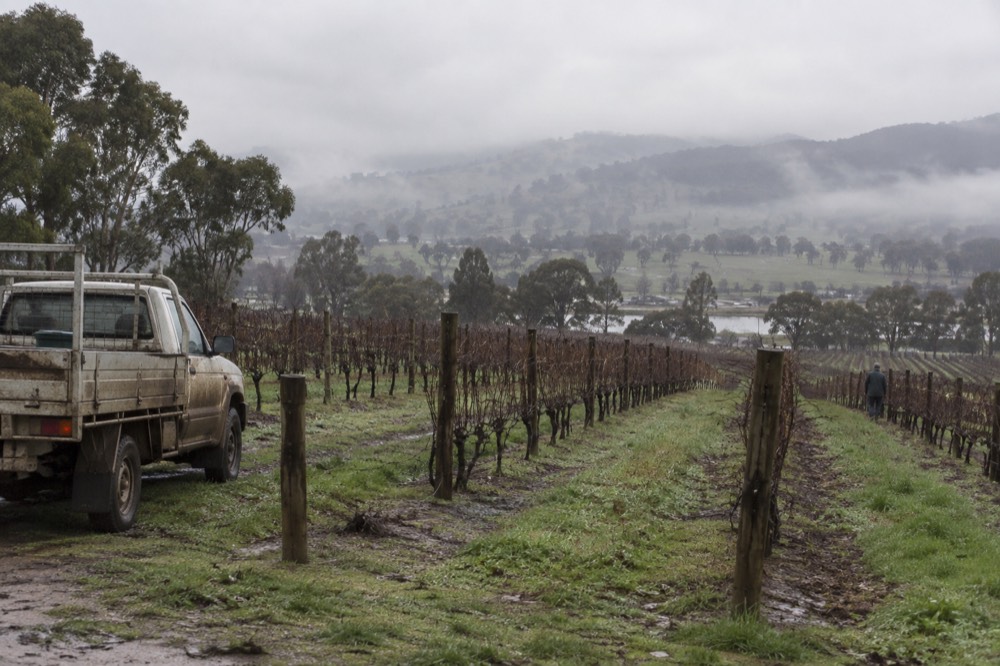
That quote comes from Yering Station's own Vintage 2025 report, written by its Chief Viticulturist and Chief Winemaker, which you can read on the winery's own site. It is a single producer in a single season, and Yering Station itself described 2025 as an early, compressed harvest, so treat it as an illustration rather than a rule. The 2026 season, by contrast, was described by Yarra Yering's winemaker as one of the most challenging he had worked, and the region's estimated crush fell 31 per cent in a single year. Vintage does not run on a timetable you can book against.
What harvest does reliably change is the feel of the property. In February and March there are tractors, bins, picking crews and the smell of ferment drifting from the winery. The cellar door is still open and running, but the whole place has an industrial energy that some visitors love and others find distracting. If you want to watch a working vintage, aim for late February and go early in the day, since pickers start at dawn and the action slows by afternoon. If you want the post-vintage calm, April is your month: the fruit is in, the staff can breathe, and the vines are still holding their leaves.
There is also a wine-quality angle worth knowing. The 2025 Yarra Valley Wine Show gave its Wine of Provenance trophy to De Bortoli's A5 Chardonnay across three vintages, and the region's pinot noir and chardonnay dominate its plantings, 44 per cent and 30 per cent of the 2026 crush respectively. A visit in any season will put those two varieties in front of you; what changes is whether you can taste them beside the tanks they were just pressed into.
When Are The Quiet Windows And The Busy Peaks?
Weekday mornings, especially Tuesday to Thursday, are the quiet windows at Yering Station in every season. Weekends and public holidays are the peaks, driven by Melbourne day trippers, and January is the busiest month of all. Winter weekdays are the quietest combination the calendar offers, and the shoulder months of April, May, September and October split the difference.
The crowd pattern at this end of the valley is a Melbourne pattern, not a tourist-season pattern. There is no long summer high season with an international wave; there is a repeating weekly rhythm in which Saturday and Sunday fill up with people driving out from a city of five million, and Monday through Thursday stay comparatively calm. School holidays sharpen the weekends further, and long weekends are the busiest days of the year, worth avoiding entirely if quiet is the goal.
The other timing variable is the day's own clock. Day tour coaches from Melbourne run roughly eight-hour days, which means most groups arrive at cellar doors between late morning and mid afternoon. An early opening time, or the first hour the cellar door runs, is nearly always calmer than the 2 pm to 4 pm band. We cannot publish Yering Station's specific opening hours or tasting conditions here, because winery operating details change and should always be read from the winery's own site before you plan around them, but the general rule holds everywhere in the valley: earlier is quieter.
If a peaceful tasting matters more to you than the winery's history, our piece on how to find a good cellar door covers the quieter producers, and the winery lunch guide explains how to build a day around a table rather than a tasting bench.
Which Tours Already Stop At Yering Station?
Several confirmed tours build Yering Station into their route, so timing your visit can mean timing a tour instead of driving. The ten-hour small-group wine day lists Yering Station as a confirmed stop, from $249.69, and the private car day with your own driver includes it alongside TarraWarra Estate and Domaine Chandon, from $234.52. Half-day and Chandon-focused tours also list it, from $85.87.
This is the practical answer for anyone who does not want to think about drink-driving law at all. Victoria's limit is 0.05, and the offence is committed at 0.05 or more, not above it; a full-licence holder who is 26 or older and blows just over the line faces three months off the road through the infringement route, with no court appearance at all. Every wine tour from Melbourne exists partly because of that law, and it is the single strongest argument for letting someone else drive on the day you visit.
The tour options that name Yering Station as a confirmed stop include, at the premium end, the ten-hour small-group day, 5 across 655 reviews, from $249.69, which also visits De Bortoli, Coldstream Hills and Medhurst. The private car day, 4.7 across 16 reviews, from $234.52, gives you the same winery with a driver and a flexible clock, which is the format to choose if you want to control your own quiet window. Further down the price range, the Chandon and sunset kangaroo safari tour, 4.9 across 353 reviews, from $140.71, and the afternoon tastings with kangaroos at dusk, 4.7 across 67 reviews, from $143.2, both list Yering Station among their stops, paired with Domaine Chandon and the Yarra Valley Chocolaterie.
A private format changes the timing question completely. On a shared coach you arrive when the coach arrives, usually in the midday band. With your own driver you can ask for an early start and be standing at the tasting bench before the first bus unloads. That is the difference between the two price points, and for visitors whose whole goal is a calm hour at one of Victoria's oldest vineyards, it is worth the money.
Is There A Good Evening Or Winter Option?
Yes, and it is underused. Winter weekdays and private evening tours are the two quietest ways to experience this end of the valley. A private evening tour with wine, whisky and a two-course dinner runs from $620.98 for the vehicle, 5 across 24 reviews, and sidesteps the daytime crowd pattern entirely, visiting Healesville venues after the coaches have gone home.
The evening option deserves more attention than it gets. The valley's daytime product is built around cellar doors, which close in the early evening, but Healesville after dark is a real town with restaurants, bars and a growing walkable precinct. The Healesville Makers Quarter, established in March 2025, bands six producers together within one block, and it is the only genuinely walkable tasting cluster in the region. An evening private tour that finishes with dinner there gives you the valley without the 11 am scrum.
Winter works the same way. The mean maximum of 13.5 C in July sounds forbidding, but the same cold that empties the car parks makes the fireplace venues better, and the region's own operators have noticed. The 2025 Victorian Tourism Awards, decided on 3 December 2025, gave Hop It silver in the Tour and Transport Operators category, and the operator has experimented with winter-specific routes built around cellar doors with open fires. The state government has also published a Victorian Wine Strategy 2025-2030, which is the clearest signal that winter wine tourism is being taken seriously rather than written off.
One caution for winter planning: the fire danger period. The CFA declares it fresh each year on dates set by conditions, and restrictions on lighting fires in the open apply throughout. Last season it ran from late December to late March in the Yarra Ranges, but those were that season's dates, not a fixed annual window, and the current season's dates should always be read from the CFA before any summer or autumn trip that involves rural roads.
Common Questions
What Is The Best Time To Visit Yering Station?
Autumn, March through May, is the best overall time: the April mean maximum is a comfortable 20.7 C, the vineyard is turning colour, and harvest is finished or finishing. Weekday mornings are the quiet windows in every season, and winter weekdays are the quietest of all.
Is Yering Station busy on weekends?
Yes. The Yarra Ranges Council region accounts for 6.3 per cent of all day trippers across Victoria, and most of that traffic arrives from Melbourne on Saturdays and Sundays. Long weekends are the busiest days of the year. If a weekend is your only option, go early, before the mid-afternoon coach band.
Can I visit Yering Station in winter?
Yes, and it is a genuinely good time if quiet is the goal. July, the coldest month, averages a 13.5 C mean maximum at the nearby Coldstream weather station. The vines are bare, but the cellar door and the region's fireplace venues are at their best, and the crowds are a fraction of summer's.
When is harvest at Yering Station?
There is no published regional harvest window, and it moves year to year. Yering Station's own 2025 report says first fruit arrived on 7 February that year, with all chardonnay and pinot noir in by the end of February, but the 2026 season ran very differently. Late February into March is the likeliest vintage window, never a guaranteed one.
Do any tours stop at Yering Station?
Yes, several confirmed listings include it. The ten-hour small-group wine day, from $249.69, the private car day with your own driver, from $234.52, and the Chandon and kangaroo safari tours, from $140.71, all list Yering Station as a stop. Check each live listing for the current route.
How far is Yering Station from Melbourne?
Yering, the locality where the winery sits, is about 51 km by road from Flinders Street Station, roughly 55 minutes at free-flow speed, though weekend traffic makes it longer. It is about 11 km past Lilydale, the end of the train line, which is why almost all visitors arrive by car or tour.